
(a) porphyrin and its isomers
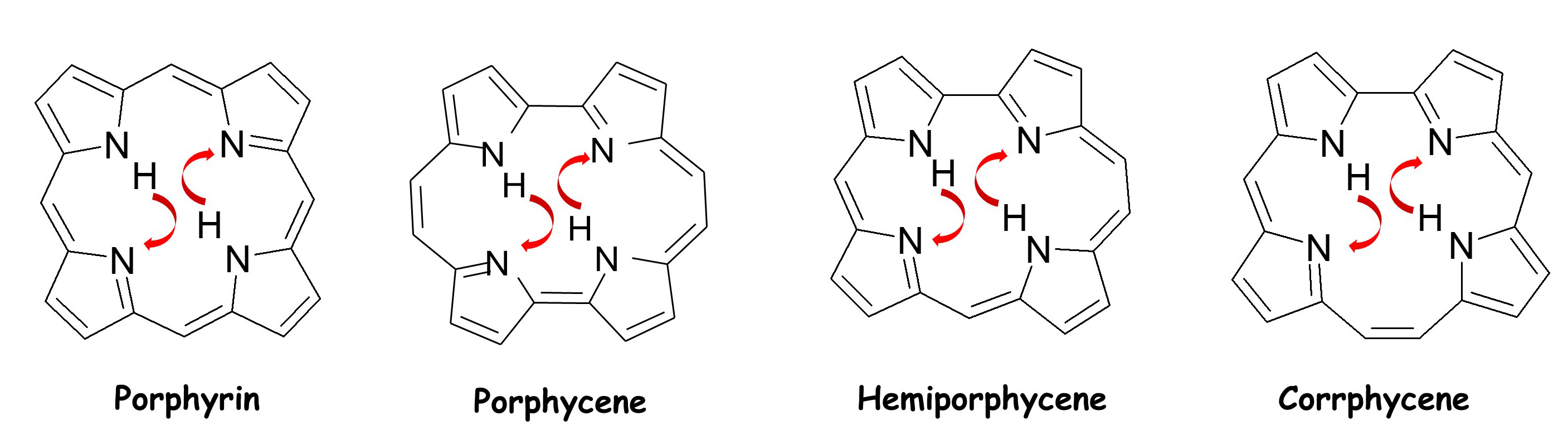
These molecules undergo intramolecular (concerted or stepwise) double hydrogen transfer. In porphyrin and hemiporphycene the reaction occurs in the ground electronic state (S0), but is not possible in the lowest excited singlet state (S1), while in porphycene it occurs in both S0 and S1, due to very strong NH-N hydrogen bonds. Unsubstituted hemiporphycene has been synthesized in our laboratory in 2016. Obtaining unsubstituted corrphycene is one of the synthetic goals of the present project.
(b) topological analogues of porphyrin: phthalocyanine and tetraazaannulene
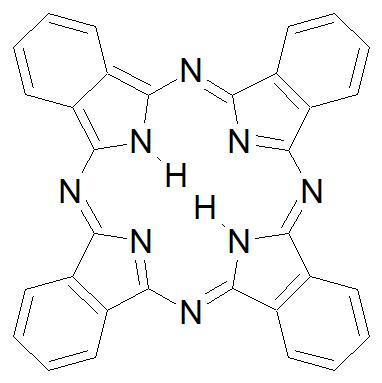
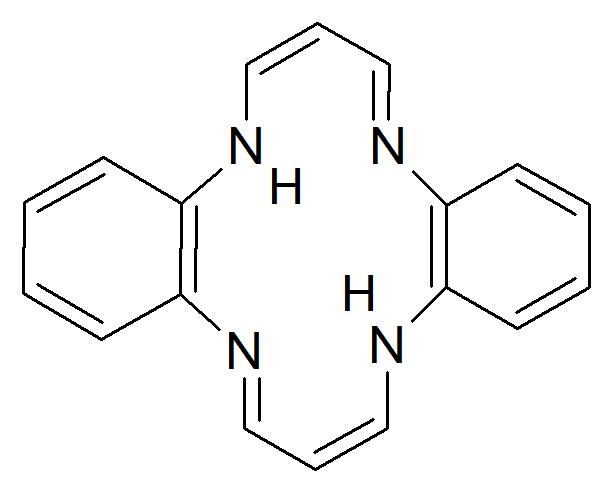
Both molecules reveal the same structural motif as porphyrin: the inner cavity consisting of four nitrogen and two hydrogen atoms. However, they differ strongly in the electronic structure. The S0-S1 transition is strong in the former, but symmetry-forbidden in the latter.
(c) bifunctional proton donor-acceptor systems

In complexes with alcohol or water, these molecules can undergo excited state double proton transfer in S1.

These coumarin-like molecules can undergo E-Z isomerization (rotamerization). This process should be accelerated by electronic excitation. Rotamerization along the C-N bond is also possible, involving breaking of the intramolecular hydrogen bond.
(d) chromophores that exhibit photoinduced electron transfer
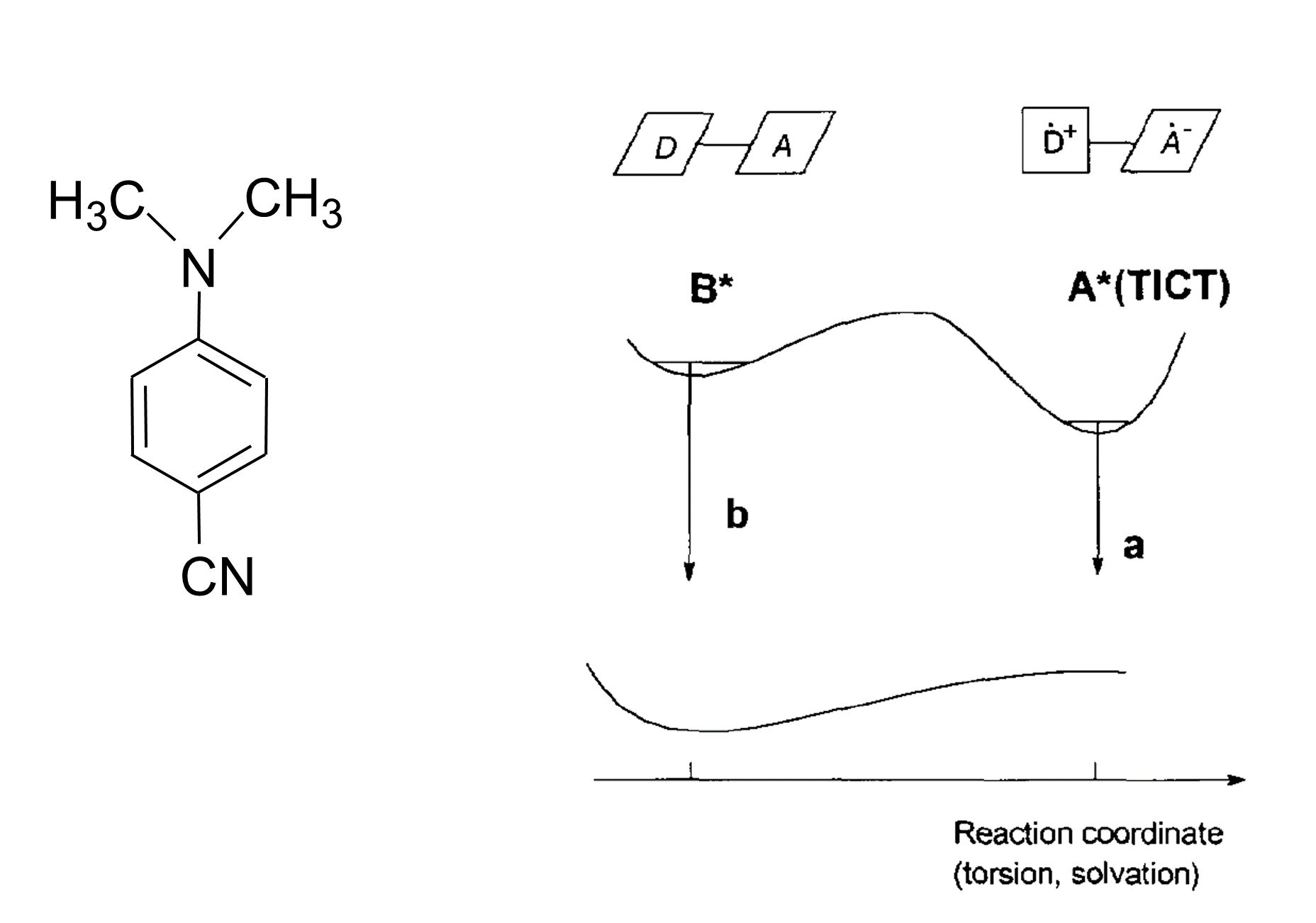
In this class, we will investigate para-N,N-dimethylaminobenzonitrile, a paradigm molecule for photoinduced electron transfer and formation of twisted intramolecular twisted state (TICT).


